
If you search for Google’s best local SEO company, you will find hundreds of agencies claiming #1 rankings, guaranteed Map Pack spots, or secret algorithms. In reality, Google does not officially crown a single "best" local SEO agency—instead, the best local SEO company is the one that consistently builds verifiable local authority, technical health, and customer conversions for businesses like yours.
Whether you run a multi-location clinic, a home services brand, a law firm, or a neighborhood shop, hiring the wrong agency can waste months of budget on vanity reports while your competitors win high-intent local calls. Here is a practical guide to evaluating top local SEO companies, understanding what real local optimization looks like today, and auditing your site before you sign a contract.
What Makes a Local SEO Company Truly "the Best"?
High-performing local SEO agencies focus on signals that help Google—and modern AI search experiences—trust your business and recommend it to nearby searchers.
1. Mastery of Google Business Profile & Local Relevance
A strong local agency treats your Google Business Profile (GBP) as a core conversion asset, not a set-and-forget listing. That includes:
- Selecting accurate primary and secondary categories that match real search demand.
- Building location-specific service pages with natural city/area context rather than thin doorway pages.
- Encouraging steady, authentic customer reviews and responding thoughtfully.
2. Rock-Solid NAP Consistency & Citations
Search engines cross-check your Name, Address, and Phone number (NAP) across your website, Google Business Profile, and reputable local directories. Inconsistent phone numbers, old addresses, or messy formatting create ambiguity that can hold back local visibility.
3. Technical SEO, Schema Markup & Page Speed
Even the best local content struggles on a slow or poorly structured site. Top local SEO teams make sure:
- Pages load quickly on mobile devices (strong Core Web Vitals like LCP, INP, and CLS).
LocalBusinessJSON-LD schema (including subtypes, address, phone, opening hours, and service areas) is properly implemented and error-free.- Indexation signals like canonical tags,
robots.txt, andXML sitemapsare clean.
4. Readiness for AI Search & Answer Engines
Local discovery is no longer limited to traditional blue links and the Map Pack. Users increasingly ask conversational questions in AI Overviews and AI search assistants. Leading agencies optimize for AI search visibility by structuring clear question-and-answer headings, maintaining accurate entity data, supporting llms.txt where appropriate, and ensuring crawlers are not accidentally blocked.
Red Flags to Watch Out For When Hiring an Agency
Before committing to a monthly retainer, watch for common warning signs:
- "Guaranteed #1 rankings" promises: No ethical agency can guarantee exact rankings in dynamic local results.
- Secretive or gated audits: If an agency refuses to share specific technical or on-page issues they plan to fix, ask why.
- Ignoring your website: Focusing only on directories or backlinks while leaving broken headings, missing schema, or slow mobile pages untouched leaves easy wins on the table.
- Vague monthly reports: Good reporting connects rankings and map impressions to phone calls, direction requests, form leads, and revenue—not just raw impressions.
How to Audit Your Website Before You Hire (or Pitch Clients)
One of the smartest moves you can make before choosing a local SEO partner—or starting a campaign—is running a baseline technical and local SEO check.
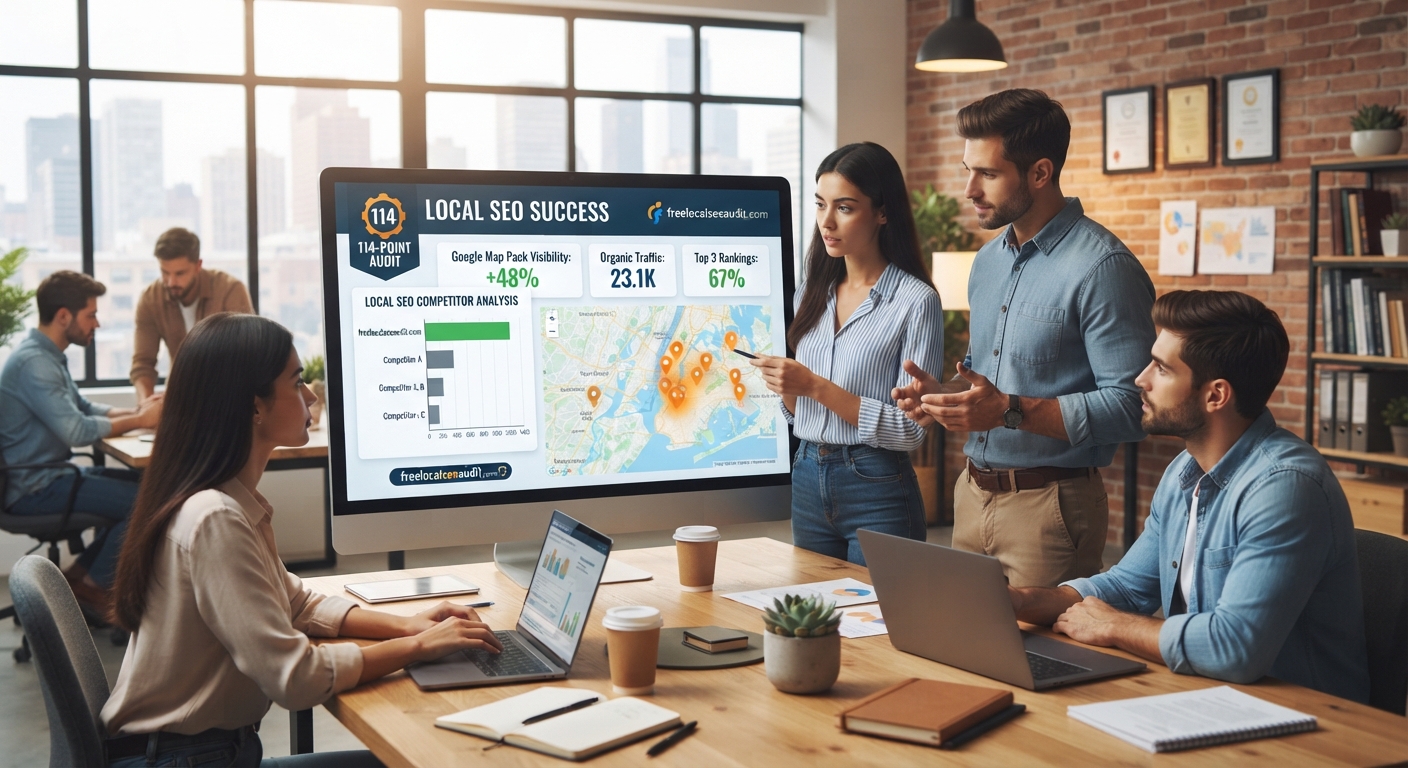
With Free Local SEO Audit (freelocalseoaudit.com), you can enter a URL and get an instant 114-point local SEO audit across 12 categories—with no signup or paid API key required—covering:
- Meta Tags & Indexing: Title tags, meta descriptions, canonicals, and robots directives.
- Content & Headings: H1/H2 structure, internal links, and content depth.
- Local SEO Signals: Visible phone numbers, click-to-call links, addresses, maps, city usage, and opening hours.
- Structured Data:
LocalBusinessJSON-LD validation. - Page Speed & Accessibility: Core Web Vitals, mobile performance, and WCAG checks.
- AI Search Visibility:
llms.txt, AI crawler access, and snippet readiness.
Starting with a clear pass/fail checklist helps you prioritize quick wins (like fixing missing title tags, adding LocalBusiness schema, and making NAP details unmistakable) and ask sharper questions when speaking with agencies.
Smart Questions to Ask Any Local SEO Company
If you are comparing two or three agencies, ask these direct questions:
- Which on-page and schema fixes will you tackle in the first 30 days?
- How do you keep our NAP data and
LocalBusinessschema aligned across our site and listings? - How do you adapt local content for both Google Maps and AI-driven search results?
- Which lead actions (calls, bookings, form submissions) will you track alongside rankings?
Final Takeaway
There is no single shortcut to finding Google’s best local SEO company, but there is a clear standard: look for transparency, strong technical and local fundamentals, and measurable business outcomes. Run a free local SEO audit first so you know exactly where your site stands today—and choose a partner who builds on real data rather than hype.